
Costs
Part of People by US state: what to keep and what to drop
People by US state by country: why the grid misleads
People by US state by country: why a state-by-origin grid misleads, what Census Bureau tables can support, and how to write one honest row for a famous figure.
Crossing a state field with a country field is the most error-prone table anyone can build on biographical data. Both inputs are ambiguous, the ambiguities differ in kind, and multiplying them produces a grid that looks authoritative and means almost nothing unless every cell is defined.
This page is about what such a cross-tab actually contains, and about the version of it we decline to publish.
What to take away
- An area-level figure describes an aggregate on a reference date.
- Official ancestry and ethnicity statistics are not a stable series, and comparisons across rounds break for reasons that are invisible in the published tables.
- Even where a document names a country, the country may not answer the question you are asking.
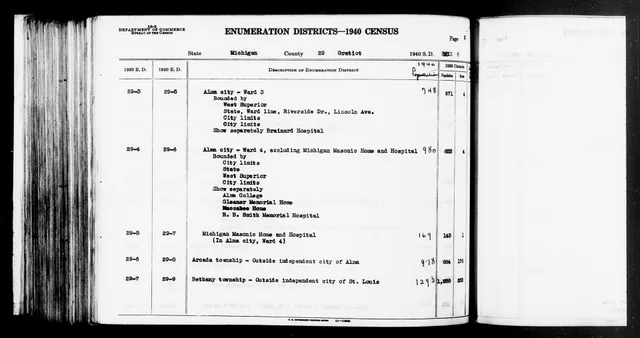
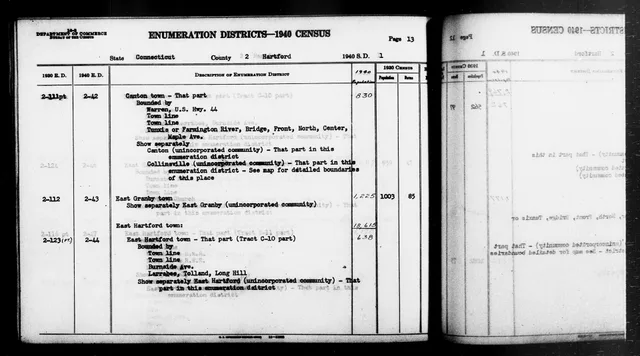
- Descriptions of a published statistical table, in the agency's own category wording, for a stated year.
Four different tables share the name
When someone asks for "people by state by country," they could mean any of these:
Four tables, one name
Population statistic
- Foreign-born residents
- Published
- Reported ancestry
- Published
- Birth state by citizenship
- Two documents
- Birth state by family origin
- Not recorded
Individual claim
- Foreign-born residents
- Not about a person
- Reported ancestry
- Not about a person
- Birth state by citizenship
- Person-level
- Birth state by family origin
- Inference only
Unit
- Foreign-born residents by state
- A population, at a census date
- Reported ancestry by state
- A population, self-reported
- State of birth by country of citizenship
- Individuals
- State of birth by country of family origin
- Individuals
Where the data comes from
- Foreign-born residents by state
- Official statistics on place of birth
- Reported ancestry by state
- An ancestry or ethnicity question, coded to a category list
- State of birth by country of citizenship
- Two separate documents, rarely both available
- State of birth by country of family origin
- Not a field of record anywhere
The first two are population statistics and are genuinely published. In the United States both come from the Census Bureau: place of birth and ancestry are now collected in the American Community Survey, which replaced the decennial census long form, and the 1980 census already asked "What is your ancestry?" The third is a person-level claim requiring two independent documents. The fourth is the one most people actually have in mind, and it is not a documented fact about anyone: it is an inference, usually from a surname or a family story.
Conflating these is the whole problem. A statistic about a population gets read as a statement about individuals, and an inference gets read as a record.
Population data does not describe individuals
An area-level figure describes an aggregate on a reference date. It supports no conclusion about any person from that area. Reasoning from the aggregate to the individual is a standard statistical error and it is the main way this cross-tab causes harm, because the individual in question usually has a name attached.
The direction that matters here: a state's published ancestry profile is not evidence about the ancestry of any person born there, and it never becomes evidence about them no matter how large the majority is.
The ancestry question changed under everyone's feet
Official ancestry and ethnicity statistics are not a stable series, and comparisons across rounds break for reasons that are invisible in the published tables.
Before comparing two ancestry rounds
- Get each round's questionnaire
- Get each round's coding instructions
- Check who answeredenumerator or household
- Check fixed list versus written-in answers
- Check how multiple answers were tabulated
- Read question wording before the numbers
The ancestry question changed
- For long stretches the category was assigned by an enumerator rather than reported by the household. Later rounds moved to self-report. Same column heading, different measurement.
- Some rounds offered a fixed list; some accepted a written-in answer that was then coded to a list maintained by the statistical agency. That list was revised between rounds.
- Whether more than one answer could be given, and how multiple answers were tabulated, changed over time.
- One household member commonly answered for the whole household.
- Categories were added, retired, merged, and split, and the names of categories shifted meaning even where the words stayed the same.
When comparing two rounds, get the questionnaire and coding instructions for each from the statistical agency that ran them. Both are published. Read the question wording first, then the numbers.
Any difference is a change in the population, the instrument, or the coding. The table alone cannot tell you which.
"Country of origin" is unstable for whole generations
Even where a document names a country, the country may not answer the question you are asking.
- Empires and unions.People emigrated from states that no longer exist. A record naming a large multinational polity says nothing about the region within it, which is the part that mattered to the family and the part that later became a country of its own. Andy Warhol, born in Pittsburgh, Pennsylvania, is the classic case: his parents came from the village of Miková, which lay in Austria-Hungary until 1918, in Czechoslovakia after 1918, and is in Slovakia today. One village, three correct country answers.
- Regions split across modern borders.A single home region can now sit in two or three states, so one documented origin maps to several modern answers.
- Port of departure is not home.Emigrants commonly traveled to a port in a neighboring state and boarded there. A record built around the port records the port.
- Last residence is not birthplace.Passenger records asked different questions in different eras, and what a form captured changed as the forms changed, as the guidance on immigrant records sets out series by series. Check which version of the form you are reading before assuming a field means birthplace.
- Allegiance is not ancestry.Naturalization records name a former sovereign or state, which is a legal status at that moment, not a description of a family's origins.
The recording convention question from the country pages applies with full force: the polity at the time, or the polity now, and the file has to say which.
What we do not publish
Ranked tallies by origin. No lists of which country, region, or community "produced the most" of anything, per state or otherwise. Two reasons, and each would be sufficient. Technically, the output of such a count is driven by which archives were digitized and which sources were indexed, so it measures record-keeping rather than people. And as a framing, scoring populations against each other using individuals' achievements is not a question we treat as worth answering.
Ancestry claims about living people. We do not assert any living person's ancestry, ethnicity, religion, nationality, or birthplace. Where someone has described their own background publicly and it bears on the subject, we quote them and date the quotation. Otherwise the field is empty. A cross-tab is exactly the kind of structure that tempts an editor to fill a blank cell by inference, and a filled cell about a living person is a published claim they never made.
The heritage guide sets out the reasoning in full.
What the cross-tab can legitimately support
What the cross-tab can support
- Descriptions of a published statistical table, in the agency's own category wording, for a stated year.
- Comparisons within a single round of a single survey, where the instrument is constant.
- Documentation of how the instrument changed, which is a genuinely useful and under-published subject in its own right.
- Research leadsa documented immigrant community in a place is a reason to search that place's records, not a conclusion about anyone in them.
Writing one row honestly
If a person-level statement really is supported, it looks like this:
Born in [state], [year]. In [source], he stated that his family emigrated from [place as he described it].
Filled in for a famous figure, it reads: Charles Lindbergh, born in Detroit, Michigan, in 1902; his father, Charles August Lindbergh, was born in Sweden and brought to Minnesota as a small child. The first half is a Michigan birth fact; the second is a fact about his father, documented separately. Neither makes Lindbergh "Swedish" in a state-by-country grid.
Two claims, two sources, one of them attributed to the subject, neither of them derived from the other. What it is not is a cell in a grid labeled with a state and a country, which strips away the attribution, the date, and the distinction between a document and a person's own account.
Bottom line
A state-by-country table multiplies two unreliable fields and presents the result as a matrix, a format that projects far more confidence than the inputs deserve. Use it to describe published statistics with their question wording attached; do not use it to characterize individuals, and do not use it to rank populations.
The state facts page covers the first field, and the country pillar linked above covers the second. Where the same cross-tab is drawn as a map, the maps pillar sets out what shading does to it.
Common questions
Is a state-by-country table ever publishable?
As a presentation of official statistics, with the question wording and the reference date attached, yes. As a description of individuals, no, and the two look identical once the caption is stripped.
What should a row hold when a source names an empire rather than a region?
The polity as the record names it, plus the date. Resolving it to a modern country is a derived value and should be labeled as one.
Why does port of departure appear so often as origin?
Because the record was created at the port. It documents where a journey was boarded, which is frequently in a different state from where it started.
Can naturalization records establish where a family came from?
They establish a former allegiance as declared on a date. That is a legal fact about a person at a moment, not a description of a family.