Guides
5 points on reading people by heritage data
People by heritage data read as a chain of documented links, with negative evidence kept and no percentage, worked through on Abraham Lincoln's parents.
A documented descent is a chain of separate links, each one a record that names two people and states the relationship between them. Break any link and the chain below it is unsupported, however good the rest looks.
This page is about reading people by heritage data as a stored chain: what counts as a link, what to do when two records disagree, and why the output is never a percentage.
Famous figures are read the same way. A claim about a notable person's parents, birthplace or birth year — about the place and era behind the name — stands on links of this kind, or it does not stand.
What to take away
- One link is one record naming both parties and stating the relationship, not a name matched across two documents.
- Store links, not people, so a corrected link updates every conclusion built on it.
- Negative evidence has to be recorded, or the same fruitless search gets repeated for years.
- Conflicting records are kept, both of them, with a note on which is preferred and why.
- A chain of links cannot be converted into a fraction of anything.
1. What makes a link, and what does not
What makes a link
| Counts as a link | Does not count |
|---|---|
| A record naming a child and a parent together | Two records with the same name in the same county |
| A will naming a relationship in its own words | A shared surname and a plausible date gap |
| A record of a life event that states a relationship | An index entry with no image and no citation |
| A record naming a party and their origin place | A family story about where the family came from |
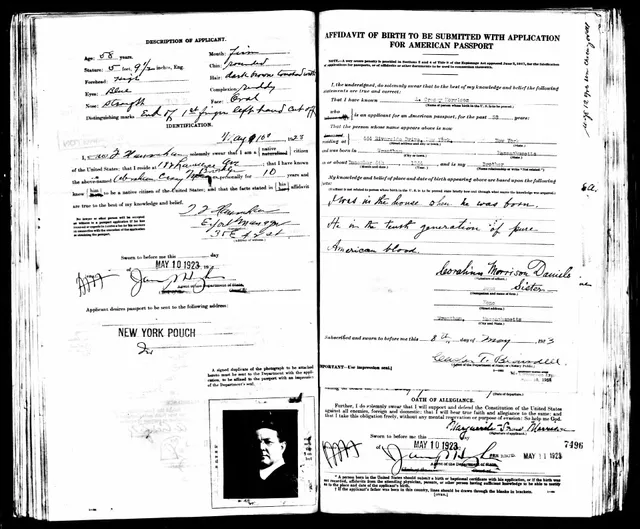
The distinction is whether the document itself asserts the relationship. Matching two names across two documents is your inference, not the record's, and it belongs in a notes field until a document supports it.
What Counts as a Link
Counts as a link
- Record naming child and parent
- Yes
- Will naming relationship
- Yes
- Life event stating relationship
- Yes
- Record naming origin place
- Yes
- Same name, same county
- No
- Shared surname and date gap
- No
- Index entry, no image or citation
- No
- Family story about origin
- No
Does not count
- Record naming child and parent
- No
- Will naming relationship
- No
- Life event stating relationship
- No
- Record naming origin place
- No
- Same name, same county
- Yes
- Shared surname and date gap
- Yes
- Index entry, no image or citation
- Yes
- Family story about origin
- Yes
2. Storing the chain
Each link needs six values, and they fit on one row: the first party as the record names them, the second party as the record names them, the relationship the record itself states, the record type and the jurisdiction it comes from, the date as the record gives it, and the citation to the record. Nothing else belongs on that row.
Six Values per Link
- Two parties by internal identifier
- Relationship as document words it
- Record type and series
- Repository and precise reference
- Record date with precision
- Confidenceestablished, probable, unresolved
Store links, not people. A person is then a query over links, which means a corrected link updates every conclusion that rested on it instead of leaving a stale summary somewhere. It is also why a published people by heritage list is a poor substitute: a bare list hides which link each name rests on.
3. Negative evidence is evidence
A search that found nothing is a result worth keeping: which series, which years, which index, which spellings tried, and the date searched. Without it, the same ground gets covered repeatedly and an absence never accumulates into anything.
It also protects you from the wrong conclusion. A gap can mean the event was not registered, registration had not started in that jurisdiction, the record was lost, or access is restricted.
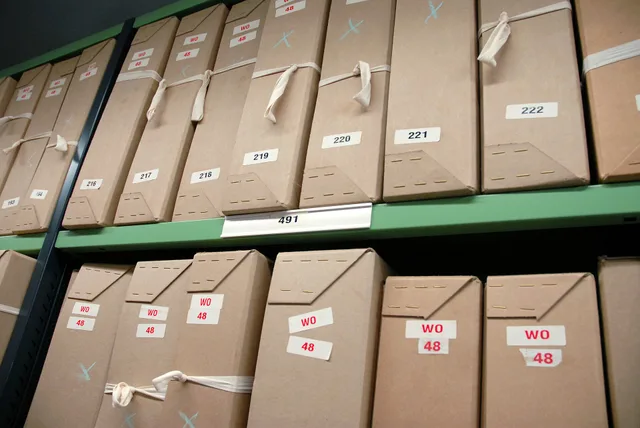
The U.S. National Archives and Records Administration (NARA) explains what its record series cover and leave out. Its guidance covers naturalization records and how immigrant records were created. NARA holds federal census schedules, passenger arrival manifests, and the naturalization records of the federal courts; state vital records offices and county clerks hold the birth, marriage, and death registers. FamilySearch and Ancestry index much of both. Read the scope note before turning a gap into a claim.
4. When two records disagree
Keep both. The instinct to pick the tidier one destroys the only signal you have that something is wrong.
A workable resolution note is three sentences. It states what each record says, which is closer to the event and to a party who knew the facts, and what would settle it.
Prefer the record created nearest the event by someone with direct knowledge, and say you did. Where nothing settles it, the field stays unresolved, a real state, not a failure.
5. Why there is no percentage
Each generation back doubles the number of ancestral slots, and past a few generations the slots outrun any plausible population, so lines fold back on each other. That folding is pedigree collapse, and it is the reason a fraction has no stable meaning: the answer depends entirely on how many generations you counted and which lines happened to leave papers.
A chain of links supports a different, stronger sentence: this person is connected to that person by these six documented links. That sentence names its evidence and survives scrutiny. "Part something" does neither.
Worked example: Abraham Lincoln's parents
The five points apply to a famous figure exactly as to anyone else. Take Abraham Lincoln, born in Kentucky in 1809, and read the heritage data link by link.
- The parents' marriage is a link between the parents only.Thomas Lincoln and Nancy Hanks married in June 1806 in Washington County, Kentucky. The record to cite is the county marriage bond of that month and the minister's return, filed with the county's marriage records at Springfield. It names both parties and states the relationship. It says nothing about a son.
- The birth is not a register link.Lincoln was born decades before Kentucky kept birth registers, so no civil birth record names him with his parents. The parent-child link rests on other documents, including Lincoln's own autobiographical writing, in which he names Thomas Lincoln as his father and says both parents were born in Virginia.
- One line ends in negative evidence.Historians have not found a surviving record that names Nancy Hanks's father. That gap belongs in the file as a searched-and-not-found result, with the series and years searched, not filled with one of the theories that circulate about him.
Stored in the six-value form from point 2, the marriage reads as one row. First party: Thomas Lincoln. Second party: Nancy Hanks. Relationship stated: marriage. Record type and jurisdiction: county marriage bond, Washington County, Kentucky. Date: June 1806. Citation: the county's marriage record as filed at Springfield.
Three links, three different kinds of evidence, and one documented absence. The result is a statement of who is connected to whom by which records, which is all the place and era can support.
Nothing here produces a claim about a living person's ancestry, ethnicity, nationality, or religion. Those are covered on the heritage overview, which sets out why this site publishes none of them. For how the place fields in these records behave, see people by country and the people by US state overview; for the dating problems, historical figures.
Common questions
Is a well-sourced family tree on a genealogy site a link?
No. It is a lead, sometimes an excellent one. Follow it to the records it cites and record those. A tree without images or citations is somebody's conclusion.
How do I handle an adoption in the chain?
As two different relationships, legal and biological, stored separately, and neither published about a living person. The legal record is a record of parentage; it is not research material about origins. In the US, adoption files are typically sealed under state law and opened only by court order, so that record sits in a court file rather than in a register you can search.
What if the only evidence is a transcript, not the original?
Record it as a transcript, name the transcriber, and mark the confidence accordingly. Transcripts introduce errors at predictable points, especially in dates and in names that crossed a script.
Can I publish the chain itself?
For people long dead and documented, yes, with citations. For anyone living, no. The people in the chain did not choose to be research subjects, and their appearance in your file is not consent.