Reviews
People by heritage facts: how to weigh evidence, with Tesla and Einstein
People by heritage facts: 21 points on what registers, migration records, testimony, genetic estimates, and other evidence can establish, with Nikola Tesla and Albert Einstein as worked examples.
Every heritage claim rests on a record of some kind, and every kind of record was created by an institution for a purpose that had nothing to do with describing a people. Knowing what each one was for tells you exactly how far it reaches.
Applied to a famous person, the same rule holds: fame multiplies the claims made about a background, not the records that can settle them. People by heritage facts are only ever as strong as the document named under them.
This page gives twenty-one points, grouped by source type. The five different variables bundled inside the word heritage are set out on the heritage rankings page; this page assumes that distinction and works through the evidence behind each.
Institutional registers
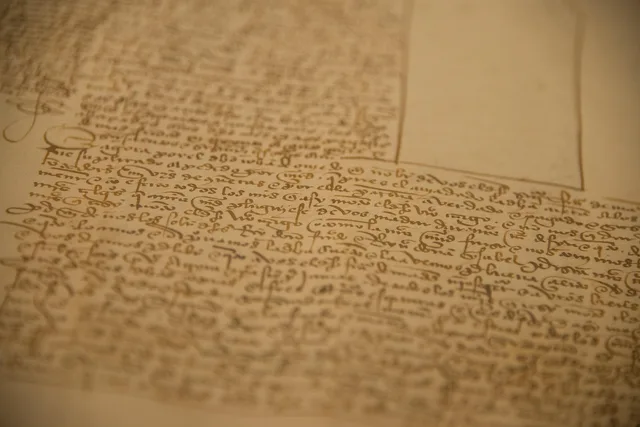
- A parish or congregational register records a rite performed on a date.Baptism, marriage and burial were events in an institution's life. For England and Wales, the General Register Office (GRO) holds the national civil registers of births, marriages and deaths, the older parish registers sit with county record offices, and the UK's National Archives sets out which nonconformist registers survive for which periods in its guide to nonconformist registers. The register is strong evidence that the rite happened and weak evidence about belief.
- The institution had its own membership rules,which may have admitted people from several communities and excluded others. Appearing in one congregation's book does not place a person in one community, and it does not exclude them from another.
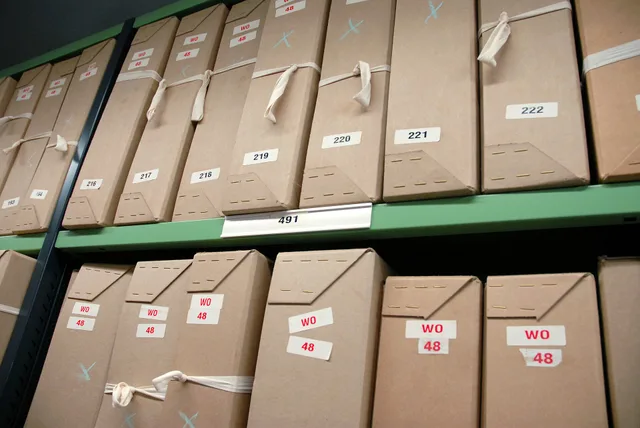
- Registers were kept unevenly and survive unevenly.Wars, fires, closures and mergers took out whole runs. Denominational archives hold some and not others, and access is at the holder's discretion; when a certificate is ordered, it is the General Register Office in England and Wales, a state vital records office or a county record office that sets the fee and publishes its own turnaround.
- A school, employer or government record had its own boxes,with definitions set by that body for its own administration. The largest such series is the federal census schedule, held in the United States by the National Archives and Records Administration (NARA) and released to the public only after a closure period set by law; its questions and its categories changed from one census to the next. Those categories are evidence of how the institution classified people, which is a real historical fact about the institution and not a description of the person.
Migration and status records
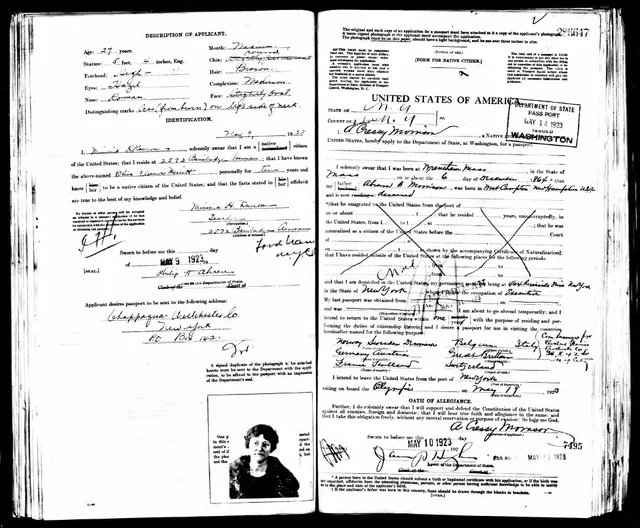
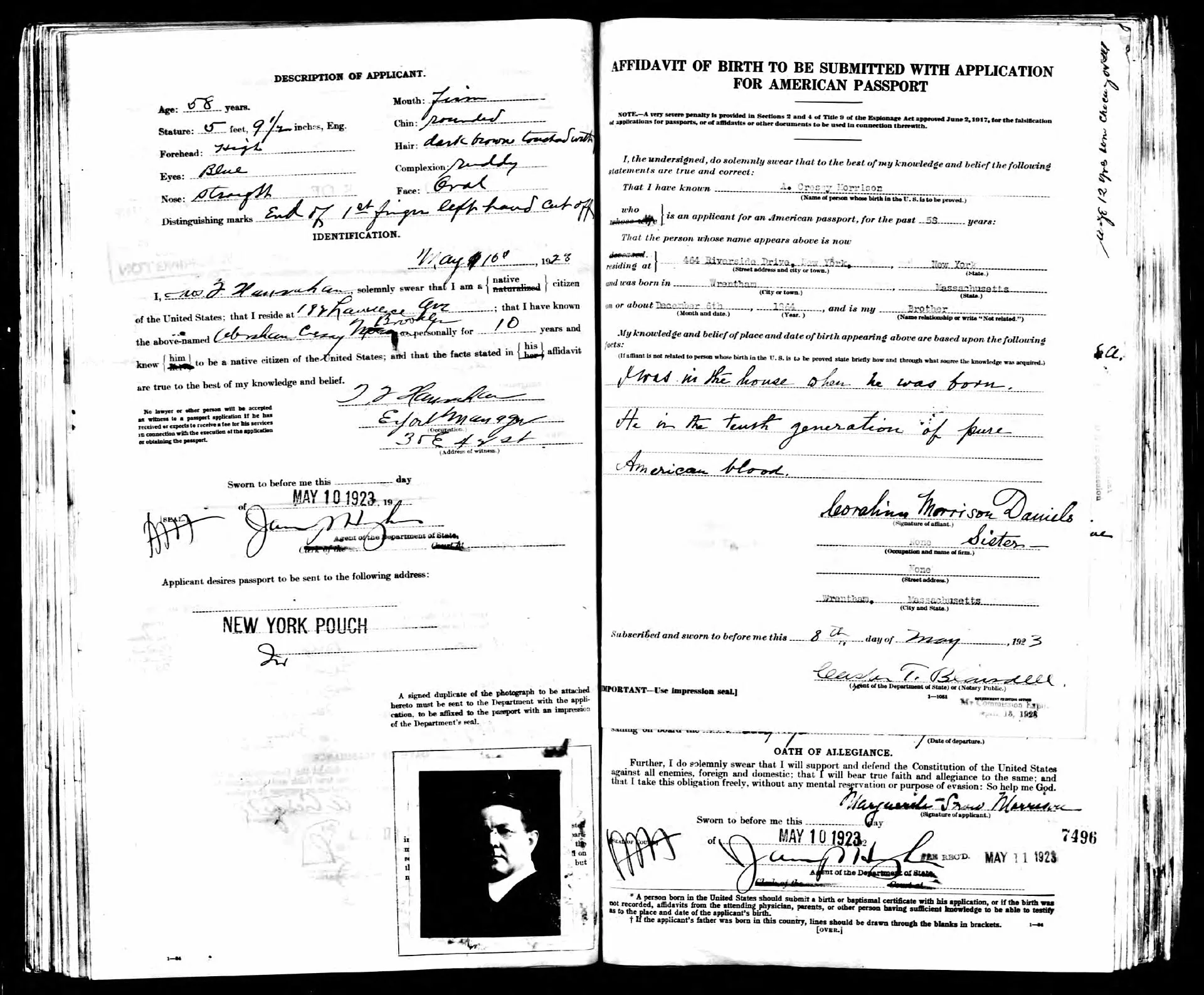
- Arrival and passenger records capture what a clerk wrote,from what was said, in the clerk's spelling, into the fields the form provided that year. In the United States, ship passenger arrival manifests — including those for Castle Garden and Ellis Island in New York — are held by the National Archives and Records Administration (NARA) and indexed by name. The form changed repeatedly; check which version you are reading before assuming what a column means.
- The categories printed on migration forms were set by the receiving state,and they changed as its policy changed. They are administrative classes, not descriptions of peoples, and reading them as ethnicity imports a government's filing system into a biography.
- A naturalization record names a former sovereign or state.A Declaration of Intent, a Petition for Naturalization or a Certificate of Naturalization records the country renounced or left behind; United States Citizenship and Immigration Services (USCIS) holds federal naturalization files and issues a replacement certificate on Form N-565. That is a legal status at a moment, and the people by country facts page works through why it says nothing about a family's origins.
- Where enslavement broke the documentary chain, the gap is a product of the system that produced the records.Absence of a name in a series is evidence about how the records were kept, and it is never evidence about a family's past.
- Displacement, forced relocation and border changes separated people from the offices holding their records.A missing document frequently means the office is now in another jurisdiction, not that the event never happened.
Worked examples: Nikola Tesla and Albert Einstein
For a first example, take Nikola Tesla. Biographers give his birthplace as Smiljan in 1856, then part of the Austrian Empire and now in Croatia. He became a United States citizen in 1891. His father, Milutin, was a Serbian Orthodox priest, and Tesla is usually described as an ethnic Serb.
That is three claims resting on three kinds of evidence. The birthplace rests on a register entry that names a place under the sovereign of the day. The citizenship rests on a naturalization record, which is a legal status at a moment. The Serbian description rests on his father's church office and on how Tesla and his biographers described him. That is testimony about community, not a government record.
Albert Einstein shows the same split. Born in Ulm, in the Kingdom of Württemberg, in 1879, he renounced his Württemberg citizenship in 1896, became a Swiss citizen in 1901 and a United States citizen in October 1940. Records of his citizenship at four points in his life exist, and none of them states a heritage.
Weigh both men the way you would weigh any family. Keep each record to the narrow fact it states: a place, a status, a rite. Then let the person's own description carry the community, because no register outranks the subject on that question.
Testimony
- Oral history is a real source with its own standards.Recorded, dated, attributed to a named speaker, with the questions preserved, it is evidence of what that person said and knew.
- A family story is testimony about what a family believed.That belief is itself a fact worth recording, and it is a research lead about the past rather than a finding. Record it as an account, with whose account it is.
- The person's own description of their background is the primary source for the social parts of the bundle.Ethnicity, religion and culture are constituted by identification and recognition; no external document outranks the subject on them.
Genetic estimates
- Populations that married within themselves over generations share more DNA than the documentary relationships imply.Where that history exists, shared-segment estimates read as closer kinship than the paper trail supports, and match lists get long.
- A match list is a set of probabilistic relationships, not a pedigree.It suggests where to search. Commercial estimates from AncestryDNA, 23andMe, FamilyTreeDNA and MyHeritage, and comparison services such as GEDmatch, all stop at a probability and a range; converting one into a lineage requires documents, and the estimate never becomes one, a limit described by MedlinePlus Genetics in its guidance on direct-to-consumer genetic testing.
Membership, belief and language
- Indigenous nations determine their own citizenship,under their own law. In the United States, the Bureau of Indian Affairs and the records of the Dawes Commission — the Dawes Rolls of the Five Civilized Tribes — document who was enrolled in the late nineteenth and early twentieth centuries, but enrollment today runs through each nation's own enrollment office, applying that nation's constitution or code and its own membership rules. An individual's claim of descent is not membership, and no external body, dataset or test can supply it.
- Religious communities define membership by their own law and practice.In the Catholic Church the governing law is canon law, and the entry that establishes membership is the baptismal register of the parish where the baptism was recorded; other denominations keep their own membership rolls. A religion recorded at a birth is an entry on a civil form made by an official; practice is a separate question; and conversion happens in both directions throughout a life.
- Language spoken is not descent.Languages are learned, lost across generations, and shared between unrelated communities. A language on a record tells you what was spoken in a household, which is useful and is not ancestry.
- Appearance is not evidence,in any direction, at any strength. Photographs support no conclusion about descent, and reasoning from one is how a great deal of harm gets published.
Families and records
- Adoption, fostering, step-relationships and informal kinship produce families whose documentary and biological lines differ.Both are real families. A record series that tracks one is not describing the other, and neither is a correction of the other.
- Where sources disagree, record the disagreement.Resolving it by choosing the tidier version discards the most informative thing in the file, and the two accounts often turn out to be answering different questions.
- No living person's ancestry, ethnicity, religion, nationality or birthplace is asserted here.Where someone has publicly described their own background and it bears on the subject, we quote it, name the outlet and date it. Otherwise the field stays empty. It is not filled by a name, a face, a place, a relative or a percentage, and no ranked tally of people by origin is published at any level, since such a count measures which archives were indexed rather than the people in them.
What an entry states, and where it stops
What an entry states
- The relation, nameddescent, ethnicity, nationality, religion, or culture.
- The evidence type, and the specific record or statement it comes from.
- The date the record was made and the date it was consulted.
- The wording of the source, kept rather than paraphrased into an assertion.
- Unresolved marked unresolved.
Written this way, an entry can be checked by a stranger and cannot be quietly upgraded by an editor tightening a sentence, which is the failure the heritage rankings page warns against.
Bottom line
Match the claim to the record that can carry it, and stop where that record stops. A rite, a form, a roll and a test each answer a narrow question, and the questions people most want answered about heritage are answered by the person, or not at all.
Common questions
A documented ancestor is established. What does that support?
That link, and nothing beyond it. A traced line is a fact about the people on it, not a summary of everyone a person descends from, and the arithmetic of ancestral lines is set out on the heritage rankings page.
How should a record's own category wording be handled?
Quote it, attribute it to the body that used it, and date it. Historical classifications carry meanings that have shifted, and translating one into a modern term silently changes what the record said.