
Costs
People by heritage rankings 2027: why we won't rank
People by heritage rankings 2027 are not published here: archive gaps, shifting categories, and group-ranking concerns make the tally misleading.
This page explains why the proposed “people by heritage rankings 2027” will not appear here. It was originally scheduled as a ranked tally: which origins, communities, or countries account for the most notable people. It is not that page, and it never will be. What follows is the reasoning, because a refusal without reasoning is just a gap.
Two separate arguments rule the tally out. The first is that it does not measure what it claims to. The second is that even a perfect measurement would be a thing this site declines to publish. The year in the proposed 2027 tally does not mark a special policy change or event: the site rejects this format as a standing editorial choice, so no 2027 edition will appear.
What to take away
- A count of people by origin is a count of surviving, digitized, indexed archives.
- The categories being counted were defined by whoever wrote the form, and they changed between editions.
- The denominator for any such rate does not exist for most periods and places.
- Even with clean data, sorting populations by the achievements of individuals is a framing this site does not use.
The measurement argument
Four failures stack, and each is enough on its own.
| Failure | Effect on the tally |
|---|
Four Failures in the Tally
Failure
- Uneven record survival
- Lost archives score low
- Uneven digitization
- Scanned first dominates count
- Language of the index
- Outside index unfindable
- Category instability
- Label constant, contents change
Effect on the tally
- Uneven record survival
- Uneven digitization
- Language of the index
- Category instability
The four failures are:
- Uneven record creation:records were not created evenly across people and communities.
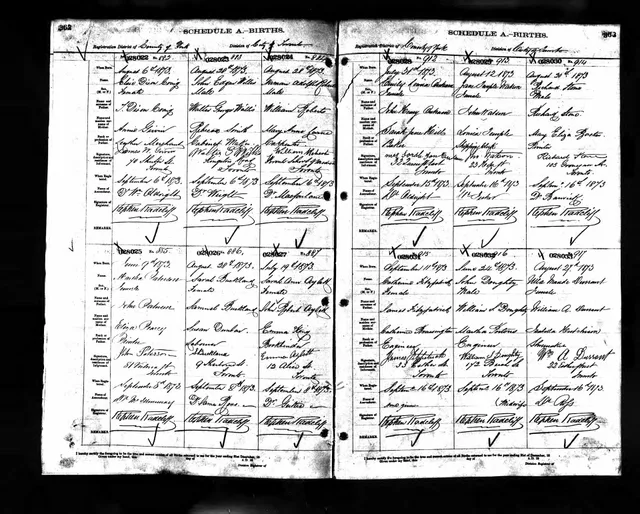
- Record loss:war and fire destroyed or damaged archives.
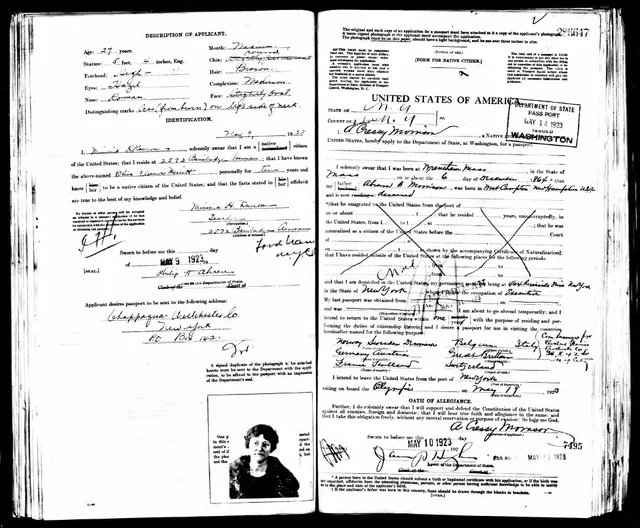
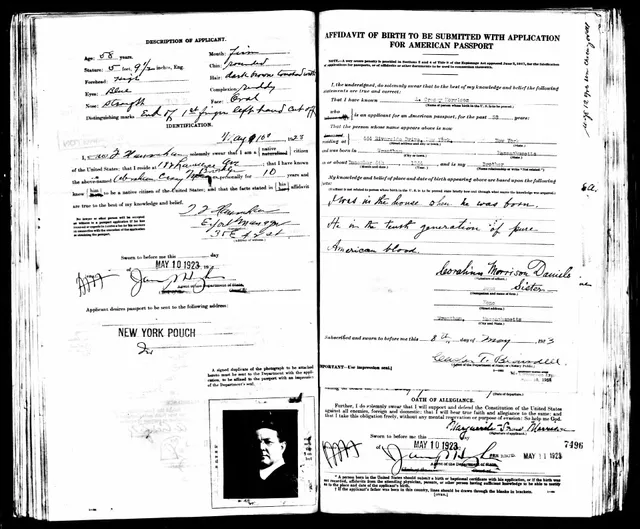
- Uneven survival and access:surviving records are not equally digitized, indexed, or reachable; funding and copyright shape what is available.
- Category drift:official options change between forms, so the same label cannot be assumed to mean the same thing.
The first three are versions of the same problem: what you are counting is the reachable record set, and its shape has more to do with funding, war, fire, and copyright than with the people. That is survivorship bias operating on a scale that swamps any real signal.
The fourth is different and is often missed: categories in official statistics are not natural kinds; they are answer options on a form.
Forms changed: options added, retired, merged, split; self-report replaced observation by an enumerator; single-choice questions became multiple-choice. National statistical agencies say so directly in their own guidance on how ethnicity is collected and what the resulting figures can bear. A tally spanning two such editions compares two different questions. The U.S. Census Bureau's 1990 and 2000 census forms provide one concrete example: the 1990 form asked respondents to select one race, while the 2000 Census allowed respondents to mark one or more races and separated “Asian or Pacific Islander” into “Asian” and “Native Hawaiian or Other Pacific Islander” categories.
The denominator that is not there
Suppose the numerator were clean. A rate needs a base population for the same place, period, and category. For most of the periods people want to compare, that base is an estimate built from the same incomplete records, or a modern figure standing in for a historical one.
Divide a count of people documented over three centuries by a present-day population and the result is arithmetic without meaning. It will still sort, and the sorted output will still be quoted.
The framing argument
Set the measurement problems aside and assume perfect data. The output would be a table ordering communities and countries by the achievements of individuals born into them.
That table has no legitimate use that a narrower, better question does not serve. It invites the reader to attribute a group value to individuals: the ecological fallacy in its most consequential form.
It has a long history of being produced for exactly that purpose. This site declines the framing regardless of what the numbers would show, and says so on the page rather than quietly publishing something adjacent.
What gets published instead
- Which record types establish a place of origin, and what each one actually says.
- How and why a category on a form changed between editions, with the wording.
- What a commercial ancestry estimate measures, and why the same sample returns different numbers after a panel update.
- Why a surname points at a naming convention rather than at descent.
That material is on the heritage pillar and its siblings: record and place on the country pillar, period on the century pillar.
The measurement side is on the fame rankings pillar, which sets the same argument for lists of individuals.
If you have been asked to build one anyway
Three questions, put in writing, usually end the request without an argument.
- Which records are included, and what gaps in creation, survival, digitization, and indexing remain?
- Which exact category wording and matching population denominator apply to each place and period?
- What decision depends on publishing those communities in rank order?
Three Questions to End the Request
Which record set is the numerator drawn from?
Where does the denominator come from?
What decision will change based on the order?
The third question is the one that settles it. In almost every case the honest answer is that no decision depends on it, which means the table exists to be read as a statement about groups.
Common questions
Is it different if the data is only about people who died centuries ago?
The measurement problems are worse, not better, because archive survival dominates. The framing problem is unchanged, since the categories being counted are modern ones applied backward.
What if the tally is presented purely as a curiosity?
Presentation does not change how a sorted list is read. A ranked table of groups is read as a ranking of groups whatever sits above it.
Can I count records rather than people?
Yes, and it is a genuinely useful thing to publish: how many records of a given type survive for a jurisdiction and period, and how much is indexed. That is a statement about archives, and it is honest because it claims to be one.
Does this apply to a single country's own national biography?
The measurement problems apply in full. The American National Biography is a national biographical reference work; its entries reflect the project's editorial policy over time, and counting them by region measures that policy.