Guides
Quebec Heritage Databases: Searching Parish Records
Quebec heritage databases such as BAnQ, FamilySearch and Ancestry can support parish-record research. Learn a search sequence and how to handle variants.
What to take away
- Quebec heritage databases file records by religious parish, not by county, so a surname search alone will miss people.
- BAnQ, the Bibliothèque et Archives nationales du Québec, holds the main digitized collections, including parish registers and civil registers, and access is free online.
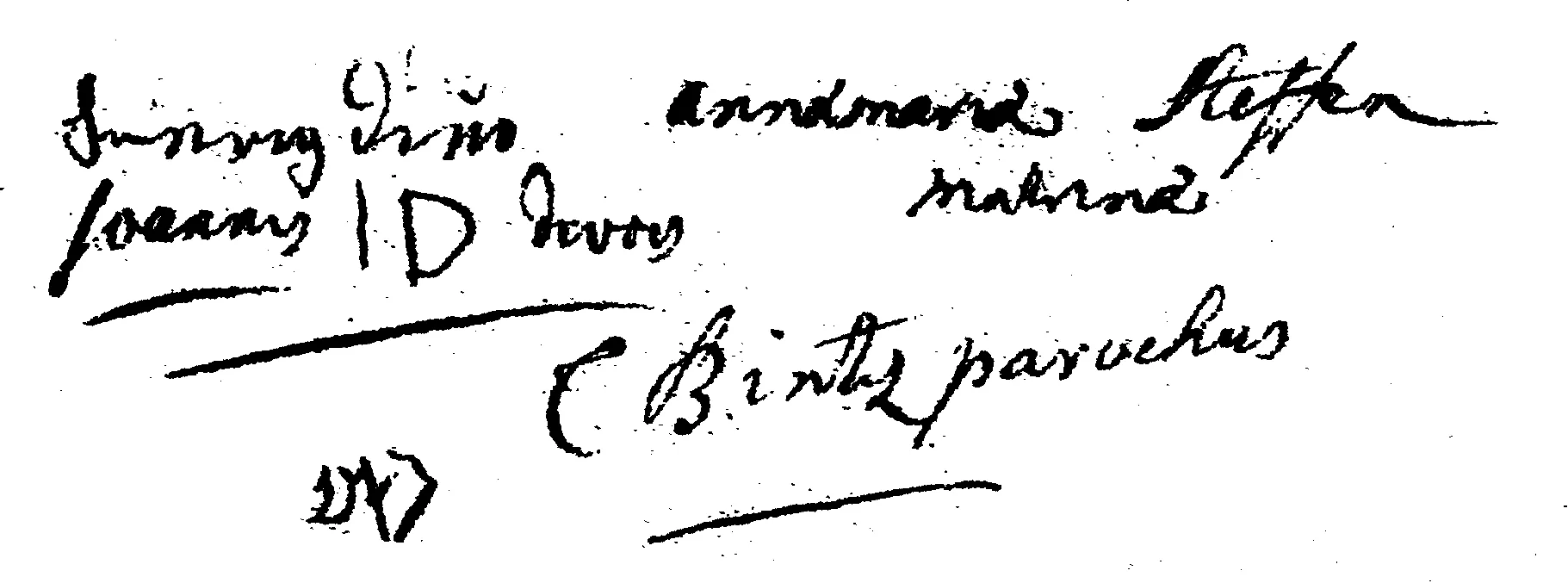
- Most records before 1900 are in French; expect handwritten script and Latin formulas in older baptisms.
- A person can appear under a dit name, a spelling variant or a Latinized first name, so search at least three forms.
- Start with the date and place of a known event, then work outward to parents and godparents.
Why parish filing changes your search
Quebec heritage databases are best searched through a parish, not a county line. The province's church registers were kept by each parish, and the civil register only became the primary record after 1994. That means a famous person born in 1850 in a village near Trois-Rivieres sits in a baptism entry for that parish, not in a district index.
County boundaries still matter for land records and censuses, but they will not lead you to a baptism. Search the parish first, then confirm the person against a second source such as a census or notarial act. This is the same discipline that our guide to heritage record sets describes for other record sets.
The main Quebec databases and what each holds
The table below compares the tools most Canadian researchers reach for. Its cost column names the access model rather than a price: free online searching, a paid subscription for a commercial index, or a fee for a certified copy. Amounts change, so check each source's published fee schedule before you pay.
Quebec databases compared
BAnQ digital
- Coverage
- Parish registers
- Language
- French
- Cost
- Free online
FamilySearch
- Coverage
- Indexed registers
- Language
- French, English
- Cost
- Free account
Ancestry
- Coverage
- Registers, census
- Language
- French, English
- Cost
- Paid subscription
The main Quebec databases
| Database | Coverage | Language | Cost |
|---|---|---|---|
| BAnQ digital collections | Parish and civil registers, newspapers, notarial acts | French | Free online |
| BAnQ Pistard | Archival descriptions, not images | French | Free |
| FamilySearch Quebec collections | Indexed parish registers, some images | French, English interface | Free account |
| Ancestry Quebec records | Indexed registers, census | French, English interface | Paid subscription |
| Provincial civil register (Directeur de l'etat civil) | Births, marriages, deaths after 1994 | French | Fee per certificate |
BAnQ is the anchor. Its genealogy pages explain which registers are digitised and which still require a visit to a reading room in Montreal or Quebec City.
Beyond BAnQ, three more Quebec heritage databases belong in the same search. The Drouin collection, published today through Genealogy Quebec, is a large private set of French Canadian parish registers. PRDH, the Programme de recherche en démographie historique at the Université de Montréal, reconstructs families from the parish registers of New France. Library and Archives Canada holds the federal censuses and immigration records that can place a family in a town and a year.
Which years each source covers
Coverage is the first thing to check, because the sources overlap only in part.
- Parish registersbegin with the earliest Catholic registers of New France at Québec, and run in each parish from its founding.
- PRDHreconstructs families from the parish registers of the French regime and the period that followed, so it is the tool for early generations, not the first stop for a figure born in 1890.
- The Drouin collectionruns from the first registers into the twentieth century, which makes it the usual commercial route for later births.
- Marriage indexesat Library and Archives Canada cover the marriage side. Its guide to birth, marriage and death records lists the Répertoire alphabétique des mariages des Canadiens-français, 1760–1935 (Drouin collection, 49 volumes), and the Fichier Loiselle, an alphabetical index for many Roman Catholic marriage records from roughly 1750 to the 1900s that includes Quebec, some parts of New Brunswick, eastern Ontario and New England.
- Federal censusesat Library and Archives Canada start in the mid-nineteenth century and continue every ten years, which is how the 1901 census can place a family like Duplessis's. LAC holds census records up to 1931, and by law census returns are opened for public use after 92 years.
- The Directeur de l'état civilissues the civil record for events from 1994, when the civil register replaced the parish copy as the primary record.
For a famous figure, the birth year picks the source. Maurice Duplessis, born in 1890, falls long before the civil register, so his baptism is found in the parish register itself, through BAnQ's digitized copies or the Drouin collection.
A numbered search sequence
- Fix one dated eventa baptism, marriage or burial with a year and a parish.
- Open the BAnQ digital collection and browse the parish register for that year.
- Note the entry number, the priest's spelling of the name and the parents as written.
- Search the same name in a second index, such as FamilySearch, to catch a variant spelling.
- Record the source citation before moving to the next generation.
Skipping step 4 is the usual reason a line appears to stop. The name did not vanish; it was written another way.
Five-step Quebec search sequence
- Fix one dated event with year and parish
- Browse BAnQ parish register for that year
- Note entry number, priest's spelling, parents
- Cross-check name in FamilySearch for variants
- Record source citation before next generation
Spelling, dit names and Latin
French Canadian names carry traps that English-language guides rarely mention. A dit name, such as Lapierre dit Chevalier, can be used interchangeably with the surname in different records. A priest might write Jean-Baptiste as Joannes Baptista in a Latin formula. Accents were often dropped in older hands.
Name variant traps
- Dit name used interchangeably with surname
- Latin formulaJean-Baptiste as Joannes Baptista
- Accents dropped in older handwriting
- Build variant list before searching
- Keep variant list with your notes
Build a short list of variants before you search, and keep it with your notes. The same problem appears in historical figures, where a citation chain has to survive several spellings of one name.
A negative search result in Quebec usually means the name was spelled differently, not that the record is missing.
Example: tracing a known politician
Take a real case. Maurice Duplessis, the Quebec premier, was born in Trois-Rivières in 1890. For a figure like him, the 1901 census gives a town and a birth year, and that is enough to open the parish register for the right decade.
The baptism entry names the parents, the godparents and the priest. The godparents are often relatives, so they widen the family net. From there, the marriage record of the parents gives their own parishes of origin, which is how a line moves back one generation. The same outward method is set out in our guide to heritage timelines.
Access, copies and what you cannot get online
Not every register is digitized. Some parishes hold records that BAnQ has described but not scanned, and access requires a reading room visit or a written request. Civil records after 1994 come from the Directeur de l'etat civil, Quebec's registrar of civil status, not the parish.
For a broader view of what Canadian heritage bodies hold, Library and Archives Canada links to genealogy services across the provinces. The BAnQ overview explains how its genealogy databases and archival services fit together.
Checklist before you commit time
- One dated event with a year and a parish.
- A list of at least three spelling variants.
- A second index chosen for cross-checking.
- A citation format you will actually keep.
- A decision on whether a commercial index is worth it for your line.
If the answer to the last point is unclear, read our directory of heritage records before committing further. Quebec research rewards patience more than spending.
Before you commit time
- One dated event with year and parish
- At least three spelling variants listed
- Second index chosen for cross-checking
- Citation format you will keep
- Decide if paid subscription is worth it